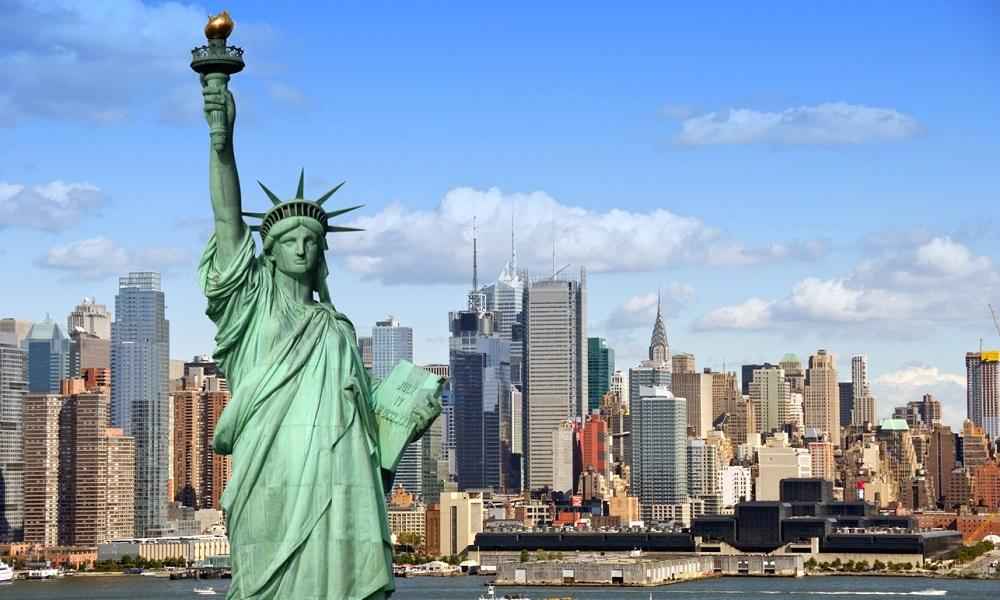
There is a specific kind of magic that happens when you cross a state line in the middle of the night, the hum of the tires on the asphalt changing pitch just enough to wake you from a light doze. To travel the United States is to realize, quite quickly, that you aren’t just visiting one country—you are visiting fifty small nations stitched together by a shared history and a legendary interstate system.
From the neon-soaked canyons of Manhattan to the silent, ancient redwoods of the Pacific Northwest, the U.S. offers a scale of diversity that is almost impossible to grasp until you’ve seen the sun set over the desert and rise over a jagged mountain range two days later. But the real beauty of American travel isn’t found in the “must-see” lists or the crowded tourist traps; it’s found in the spaces in between.
The Allure of the Open Road
If Europe is best seen by train, the United States belongs to the car. The American road trip is a rite of passage, a cultural pillar that has inspired novelists and songwriters for a century. There is a profound sense of freedom in pulling onto a highway like I-40 or the iconic Route 66 with nothing but a loose itinerary and a decent playlist.
Driving across the Great Plains, for instance, is often dismissed as “flyover country.” But for the traveler who slows down, there is a meditative quality to the rolling wheat fields of Kansas and the vast, unobstructed skies of Nebraska. It is here that you find the “World’s Largest” roadside attractions, the neon-lit diners that haven’t changed their coffee recipe since 1954, and the kind of hospitality that makes you feel like a long-lost cousin rather than a stranger passing through.
The Coastal Contrasts
To understand the U.S., you have to reconcile its two coasts, which often feel like entirely different worlds.
The East Coast is the land of history and high-speed energy. In Boston and Philadelphia, you can walk the same cobblestones as the Founding Fathers, surrounded by red-brick architecture that feels deeply rooted in the past. New York City, the “Capital of the World,” is an assault on the senses in the best way possible. It is a city of micro-cultures; you can travel from a bustling Dim Sum shop in Flushing to a quiet jazz club in the West Village in less than an hour.
Then, there is the West Coast. California, Oregon, and Washington trade the frantic energy of the East for a relationship with nature that borders on the spiritual. Highway 1, hugging the cliffs of Big Sur, offers arguably the most beautiful drive on the planet. Here, the mountains meet the sea with a violent, dramatic beauty. The air smells of salt and eucalyptus, and the pace of life slows down to match the rhythm of the Pacific waves.
The Red Rock Majesty of the Southwest
If I were asked to pick one region that defines the “otherworldliness” of America, it would be the Southwest. Arizona, Utah, and New Mexico look like the set of a science fiction film. The “Grand Circle” of National Parks—Zion, Bryce Canyon, Arches, Canyonlands, and the Grand Canyon—showcases the raw power of erosion and time.
Walking through the Narrows in Zion National Park, with thousand-foot sandstone walls closing in on either side, is a humbling experience. It reminds you that despite our sprawling cities and technological leaps, the wilderness still holds the upper hand. In New Mexico, the “Land of Enchantment,” the culture is a beautiful blend of Indigenous traditions and Spanish colonial history, reflected in the earthy adobe architecture and the spicy, sun-drenched flavors of the local cuisine.
The Soul of the South
Traveling through the American South is a journey of the senses. It is a region defined by its complexities, its music, and, most importantly, its food. To eat your way through the South is to understand the heart of American comfort. Whether it’s a plate of slow-smoked brisket in a Texas shack, spicy gumbo in New Orleans, or soul food in Atlanta, the cuisine is a testament to resilience and creativity.
Music is the lifeblood of this region. You can trace the roots of nearly every modern genre—jazz, blues, rock and roll, country—to the humid air of the Mississippi Delta and the honky-tonks of Nashville. In New Orleans, music doesn’t stay inside the clubs; it spills out into the streets of the French Quarter, a constant, brassy reminder that life is meant to be celebrated, even in the face of hardship.
The National Park System: America’s Best Idea
It is impossible to discuss U.S. travel without mentioning the National Parks. Often called “America’s Best Idea,” these protected lands are the crown jewels of the country. Yellowstone, the world’s first national park, is a geothermal wonderland of geysers and grizzly bears. The Great Smoky Mountains, draped in a permanent blue haze, offer a lush, Appalachian escape.
These parks provide a sanctuary not just for wildlife, but for the human spirit. In a world that is increasingly loud and digital, the silence of a backcountry campsite in Glacier National Park or the star-studded darkness of the Mojave Desert is a necessary recalibration.
The Small Town Heartbeat
While the big cities get the headlines, the soul of the United States resides in its small towns. It’s the town square in a quiet Georgia village, the fishing docks of a Maine harbor, and the mountain towns of Colorado where the local brewery serves as the community living room.
In these places, the “American Dream” isn’t a billboard; it’s a conversation at a hardware store. Travelers who take the time to step off the beaten path and stay in local B&Bs or visit Saturday morning farmers’ markets will find a country that is far more nuanced and welcoming than the evening news might suggest.
Finding Your Own America
The beauty of traveling the United States is that there is no “right” way to do it. You can spend a month hiking the Appalachian Trail, a week losing yourself in the Smithsonian museums of Washington D.C., or a weekend chasing the lights of the Las Vegas Strip.
Every traveler finds a different version of America. For some, it’s the rugged independence of the Alaskan frontier. For others, it’s the tropical rhythm of the Florida Keys or the historic charm of Charleston.
The United States is a grand, messy, beautiful experiment, and its geography is just as diverse as its people. When you travel here, don’t just look for the landmarks you’ve seen in movies. Look for the local legends, the regional dialects, and the hidden trails. Because the true American experience isn’t found at the end of the journey—it’s found in the miles you cover and the people you meet along the way.